
Introduction
New Zealand has become a major destination for Indian students aiming to build their careers overseas. One of the biggest attractions is its flexible post-study work visa policy, allowing international graduates to gain valuable work experience after completing their studies. In 2025, the New Zealand government introduced several updates to post-study work rules—especially regarding which courses and cities deliver the best work opportunities and visa durations.
This blog explains the latest 2025 post-study work visa rules, eligibility by course level, city-based duration factors, and smart tips for planning your education-to-employment journey in New Zealand.
How Does the Post-Study Work Visa (PSWV) Work in 2025?
The Post-Study Work Visa in New Zealand enables international graduates to stay and work in the country after completing eligible courses at permitted institutions. The core requirements are:
- You must have completed a recognized qualification at Level 4 or higher (NZQF) at a New Zealand education provider.
- You must apply for your post-study work visa within 3 months of your student visa expiring (6 months for PhD graduates).
- You must show proof of qualification, financial stability (NZD$5,000), and valid health insurance.
Visa Duration by Qualification and City
The duration of your visa—and your employment flexibility—depends on what and where you studied:
By Course Level
| Qualification (NZQF) | Minimum in-NZ Study | PSWV Duration |
|---|---|---|
| PhD/Master’s (Level 9/10) | 30 weeks | 3 years |
| Bachelor’s Degree (Level 7) | 30 weeks | 3 years |
| Postgraduate Diploma (Level 8/9) | 30 weeks | 3 years |
| Graduate Diploma Level 7 (degree field/specified skills) | 1 year | 1 year |
| Non-degree Diploma (Level 4–6) | 2 years | 1–2 years* |
*Must be on the Long-Term Skill Shortage List and work in a related field to the qualification for higher post-study work rights.
By City/Region
- Studying in Auckland: The 3-year open PSWV applies for Level 7+ degree qualification, but recent policies encourage students to study outside Auckland by providing longer work visas for programs in other regions.
- Studying Outside Auckland (e.g., Waikato, Wellington, Christchurch, Dunedin): Historically, students in non-Auckland locations have sometimes been eligible for the 3-year PSWV even with shorter program durations or diplomas. Cities like Dunedin and Christchurch are known for being student-friendly and more affordable, and are often preferred for professional, business, or STEM programmes.
Work Rights During Study
- From November 2025, students in New Zealand will legally be able to work up to 25 hours per week during term time, an increase from the previous 20-hour cap.
- You can work full-time during scheduled breaks (mid-year holidays, Christmas/New Year).
Jobs You Can Do on the Post-Study Work Visa
- The PSWV is typically an “open” work visa—work for any employer in any industry.
- The skills and field of your work should relate to your qualification for Level 4–7 non-degree diplomas, but are open for degree holders.
- This flexibility helps you gain experience, build a network, and begin the skilled migrant residency pathway.
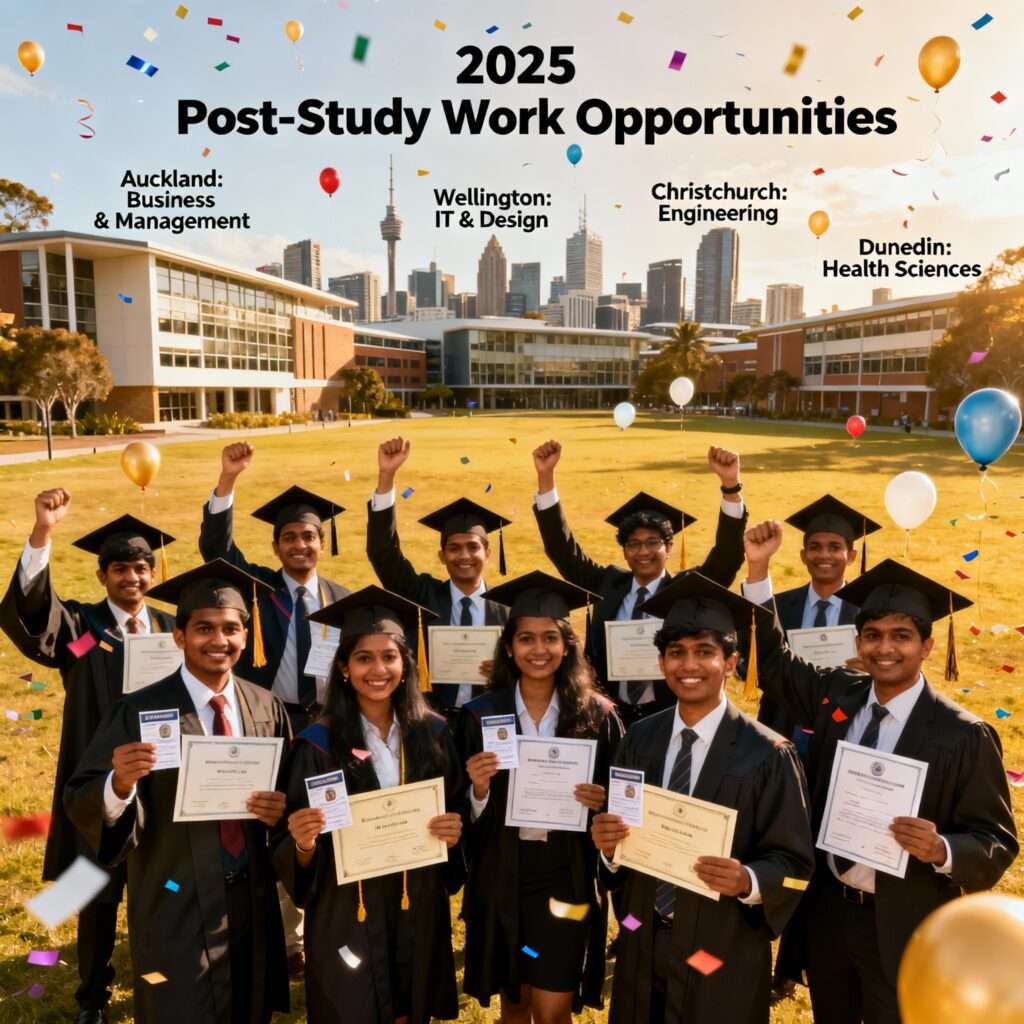
Top Cities for Post-Study Work
Auckland:
Largest job market with many multinational companies, especially in IT, business, healthcare, and logistics. Cost of living is highest, so plan finances accordingly.
Wellington:
Known as the capital city, strong for government, public administration, fintech, creative industries (design, film/digital, communications).
Christchurch:
Affordable, with strong focus on engineering, agri-business, tech, and environmental sciences. An emerging startup scene and great quality of life.
Dunedin:
Student-centric: vibrant campus life and affordable living, centered around the University of Otago and several polytechnics. Particularly strong in health sciences, education, IT, and liberal arts.
Step-By-Step: How to Apply for the 2025 Post-Study Work Visa
- Complete your qualification at an eligible New Zealand institution.
- Gather all supporting documents—qualification proof, passport, health insurance, financial proof (min. NZD$5,000).
- Apply online through the official Immigration New Zealand portal within the 3-month window post-study.
- Pay required visa fees and await confirmation of your open work visa status.
Key Updates for 2025 and Planning Tips
- Permanent Residency Pathway: Work during PSWV can count as skilled experience, benefiting your PR or work visa application later.
- Family: Your partner may get a work visa and children can attend NZ schools as domestic students while you hold PSWV.
- One-Time Rule: PSWV can only be granted once per individual; use this period wisely for PR or AEWV (Accredited Employer Work Visa) transition.
Conclusion
New Zealand’s 2025 post-study work visa policies ensure that Indian graduates—no matter their course or city—have strong pathways to build careers and even settle long-term. With the right program choice, city, and expert planning, you get more than a degree: you get global work experience, PR prospects, and the connections to kickstart your future.
Ready to maximize your post-study work options? Contact Ausizz Migration Consultants for personalized guidance on course selection, city preference, visa process, and long-term career planning. Start your successful New Zealand journey with trusted support!
Frequently Asked Questions (FAQs)
Q1: How long is the post-study work visa for Master’s or Bachelor’s in New Zealand?
A1: Up to 3 years for those who studied degree-level courses (Level 7+), provided minimum in-NZ study duration is met.
Q2: Do I get additional work rights if I study outside Auckland?
A2: Some non-Auckland cities offer longer PSWV or more flexible conditions, but degree-level students get 3-year visas nationwide.
Q3: Can diploma holders get post-study work visas?
A3: Yes, but only for Level 7 graduate diplomas in specific fields or Level 4–6 diplomas on the skill shortage list, with related work rights.
Q4: Can I bring my spouse/children on a post-study work visa?
A4: Yes—your partner may apply for a work visa, and dependent children may study as domestic students.
Q5: Is the post-study work visa open (any job, any employer)?
A5: Yes for most degree holders; diploma-based visas may require your job to relate to your qualification.
